 Reviews


 Proudly American


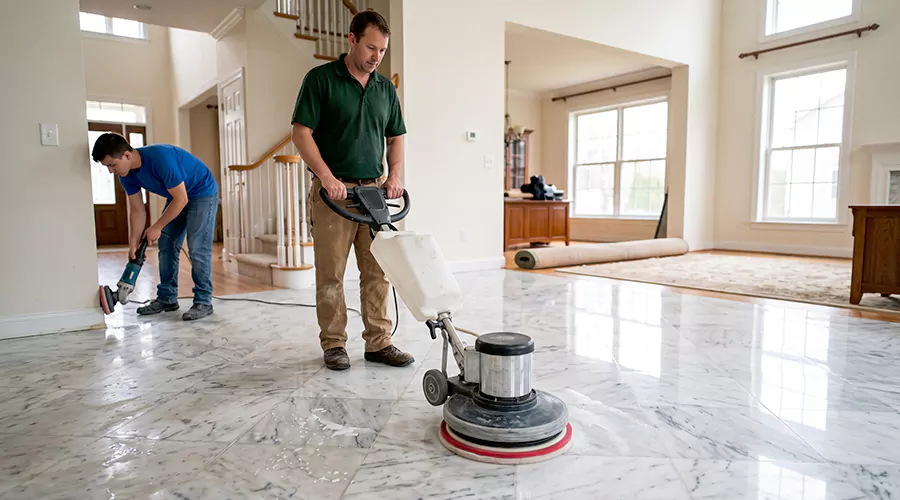
Most residential marble floors benefit from polishing about every 1 to 3 years, but the correct timing depends more on wear than on a fixed calendar. Water damage floor repair may be needed when moisture causes staining, warping, or damage to flooring materials. Low-traffic rooms can often go longer, while entryways and hallways may lose their finish sooner. Current 2026 guidance places moderate residential traffic around this general range.
Grit and acidic spills can gradually reduce marble's reflectivity. Polishing should restore a worn finish rather than become an automatic annual treatment.
How Often Should Different Marble Floors Be Polished?
The polishing interval should match traffic and visible wear. A quiet guest bathroom may keep its finish for several years, while a busy entry can become dull much sooner. Many residential floors fall near a 1-to-3-year cycle, while low-use areas can often wait longer.
| Floor Use | Practical Polishing Interval |
|---|---|
| Low-traffic residential room | About 3+ years or as needed |
| Moderate residential traffic | About 1 to 3 years |
| Busy entry or hallway | About 1 to 2 years or as needed |
| Heavy commercial traffic | Often more frequently |
These ranges are guides rather than deadlines. A smooth floor with an even shine does not need polishing just because a date has arrived.
What Signs Show Marble Needs Polishing?
Marble needs polishing when its finish has lost reflectivity but the stone is still relatively smooth. Light wear often appears first in walking paths or near doorways. The change is easier to see when daylight reflects across the floor at a low angle.
Look for these signs:
- High-traffic areas look dull beside protected areas.
- Light scratches are visible under side lighting.
- The surface looks cloudy after proper cleaning.
- Small etch marks interrupt the shine.
- Foot-traffic paths have a flatter appearance.
- The finish looks uneven across adjoining tiles.
- Cleaning no longer restores the previous gloss.
- Fine abrasion makes the floor feel less smooth.
Marble floor polishing is most useful when the problem remains near the surface.
Is Dull Marble Always Ready for Polishing?
No. Dirt or cleaner residue can make marble look dull even when the polished finish remains intact. The floor should be cleaned correctly before deciding that abrasive treatment is needed.
Marble cleaning and polishing are different stages. Cleaning removes soil from the surface, while polishing changes the stone finish itself.
Use a pH-neutral cleaner intended for natural stone. Avoid vinegar or acidic bathroom products because acid can etch marble rather than simply stain it.
What is the Difference Between Polishing and Full Restoration?
Polishing is usually for light scratches and lost shine. Deeper damage may require honing or a broader restoration process before the final polish is applied.
| Floor Condition | Likely Treatment |
|---|---|
| Dirty but still glossy | Cleaning |
| Slightly dull | Light polishing |
| Light etching | Polishing or light honing |
| Moderate scratches | Honing then polishing |
| Deep scratches or lippage | More extensive refinishing |
| Cracks or loose tiles | Repair before surface work |
Marble floor restoration may include grinding or honing when damage extends below the level that polishing can correct.
Does Acid Etching Change the Polishing Schedule?
Yes. Acid exposure can make a recently polished floor look dull long before normal traffic would. Lemon juice or vinegar can react with marble and physically change the polished surface.
A sealer does not make marble acid-proof. Penetrating sealers mainly help reduce liquid absorption rather than preventing etching.
One acidic spill can therefore create a dull patch even when the rest of the floor does not need polishing.
Can Marble Be Polished Too Often?
Yes. Polishing uses abrasives to refine the stone surface. Unnecessary repeated abrasive work provides little benefit when the finish is already sound.
Use condition-based maintenance:
- Clean routinely with a stone-safe product.
- Remove grit before it scratches the floor.
- Polish when reflectivity has clearly declined.
- Hone only when polishing cannot correct the damage.
- Reserve grinding for deeper defects or uneven tiles.
What Can You Check Yourself?
A reflection test can show whether wear is local or widespread. Clean the floor and let it dry before viewing it with light across the surface.
Follow these steps:
- Compare a busy walkway with an area beneath furniture.
- Look for a clear difference in reflection.
- Check whether scratches disappear after cleaning.
- Mark etched spots that stay dull.
- Note whether the surface still feels smooth.
- Recheck the floor a month later.
If only a few small marks are visible, a full-floor treatment may not be necessary.
When Should You Call a Professional?
Professional assessment is useful when dullness is accompanied by deep scratches or uneven tile edges. Deeper scratches and persistent etching can require refinishing before the final polish.
Consider professional help when:
- Scratches can be felt with a fingernail.
- Etching covers a large area.
- Tiles have noticeable height differences.
- Previous polishing left an uneven finish.
- Cracks or chips need repair.
- The marble type or previous coating is uncertain.
How Can You Make Marble Stay Polished Longer?
Routine maintenance can extend the time between polishing cycles. Grit carried indoors can create fine scratches under shoes.
Use these habits:
- Dust mop or vacuum regularly.
- Place mats at exterior entrances.
- Wipe spills promptly.
- Use only pH-neutral stone cleaner.
- Avoid vinegar and acidic products.
- Add felt pads beneath furniture.
- Avoid dragging heavy objects.
Natural stone restoration is needed less often when surface wear is controlled before it becomes deep.
Conclusion
Marble floors do not need polishing on one rigid schedule. Many residential floors fall around a 1-to-3-year interval, while low-traffic spaces can often wait longer. Let the surface condition guide the decision. Clean the floor first and compare busy areas with protected sections. If dullness remains or deeper scratches are visible, professional assessment can determine whether polishing alone is enough.
Frequently Asked Questions
Should marble floors be polished every year?
Not necessarily. Busy floors may need yearly attention, while low-use rooms can remain polished for several years.
How do I know if marble needs polishing or cleaning?
Clean it with a pH-neutral stone cleaner first. If dullness remains after drying, the finish itself may need attention.
Can polishing remove etch marks?
Light etching can often improve with polishing. Deeper etching may require honing before the final polish.
Does sealing keep marble shiny?
No. Sealing helps reduce liquid absorption, while polishing controls the level of surface shine.
Can frequent polishing damage marble?
Unnecessary abrasive work removes some surface material. Polishing should be based on actual wear rather than a fixed schedule.
Which marble areas need polishing most often?
Entryways and hallways usually show wear sooner because they receive more foot traffic and abrasive grit.